
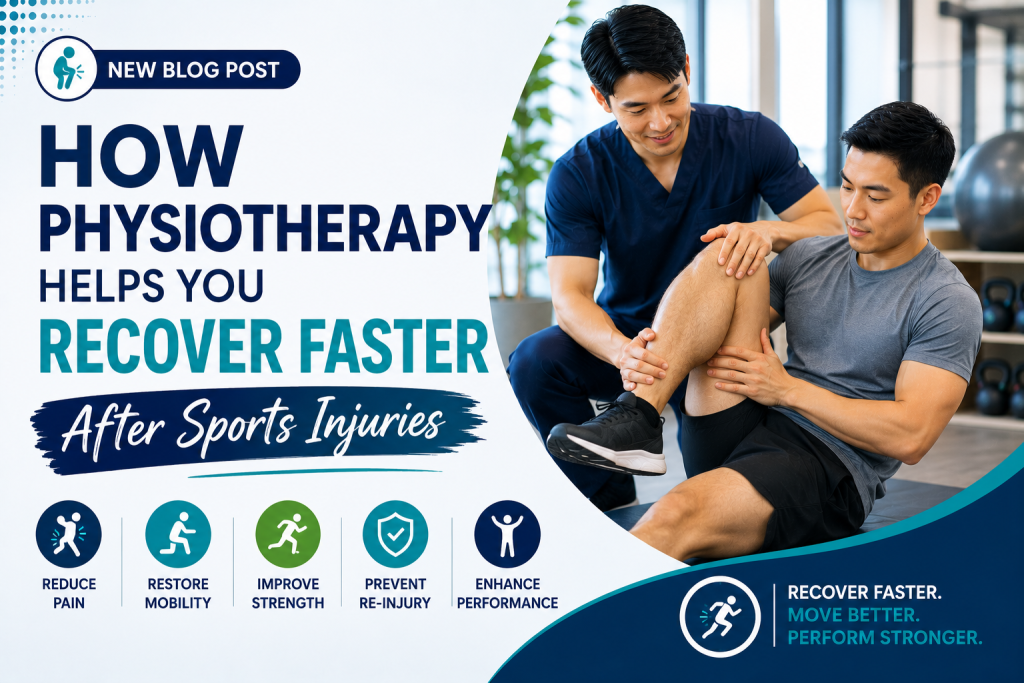
Sports injuries can happen to anyone — from professional athletes to weekend joggers and gym enthusiasts. Whether it’s a sprained ankle, muscle strain, knee injury, or shoulder pain, proper recovery is essential to prevent long-term complications and get you safely back to the activities you love.
Many people try to “push through” the pain or rely only on rest, but without proper treatment, injuries may heal incorrectly and lead to recurring pain or reduced performance.
This is where physiotherapy plays a crucial role.
Common Types of Sports Injuries
Sports injuries can affect muscles, joints, ligaments, tendons, and bones. Some of the most common conditions include:
- Sprained ankles
- Knee injuries
- Muscle strains
- Tennis elbow
- Shoulder impingement
- Shin splints
- Lower back pain
- Rotator cuff injuries
These injuries may occur due to:
- Overtraining
- Poor technique
- Lack of warm-up
- Muscle imbalance
- Sudden impact or falls
- Repetitive movements
Why Early Treatment Matters
Ignoring a sports injury can make the condition worse over time. Continuing physical activity without proper recovery may lead to:
- Chronic pain
- Reduced mobility
- Muscle weakness
- Joint instability
- Re-injury
- Longer recovery periods
Early physiotherapy treatment helps reduce inflammation, improve healing, and prevent long-term damage.
How Physiotherapy Speeds Up Recovery
1. Reduces Pain and Inflammation
Physiotherapists use various treatment methods to reduce pain and swelling, including:
- Manual therapy
- Soft tissue release
- Electrotherapy
- Dry needling
- Ice and heat therapy
These treatments help improve blood circulation and accelerate the body’s natural healing process.
2. Restores Mobility and Flexibility
After an injury, stiffness and limited movement are common. Physiotherapy includes targeted stretching and mobility exercises to help restore:
- Joint movement
- Muscle flexibility
- Proper posture
- Functional movement patterns
Improving mobility early can help prevent compensation injuries in other areas of the body.
3. Strengthens Weak Muscles
Sports injuries often cause muscle weakness due to pain or inactivity.
A physiotherapist will design a personalized rehabilitation program to strengthen:
- Core muscles
- Stabilizing muscles
- Injured muscle groups
- Supporting joints
This improves overall performance and reduces the risk of future injuries.
4. Prevents Re-Injury
One of the biggest benefits of physiotherapy is injury prevention.
Physiotherapists identify:
- Muscle imbalances
- Poor biomechanics
- Incorrect movement patterns
- Weaknesses affecting performance
By correcting these issues, patients can return to sports more safely and confidently.
5. Improves Sports Performance
Physiotherapy is not only for recovery — it also helps improve athletic performance.
Proper rehabilitation can enhance:
- Strength
- Balance
- Coordination
- Flexibility
- Endurance
- Movement efficiency
This allows athletes and active individuals to perform better while lowering injury risk.
Personalized Treatment for Every Patient
Every sports injury is different. Physiotherapy treatment plans are customized based on:
- Type of injury
- Severity
- Fitness level
- Sport or activity
- Recovery goals
Treatment may include:
- Exercise therapy
- Sports taping
- Manual therapy
- Functional training
- Balance training
- Posture correction
- Home exercise programs
When Should You See a Physiotherapist?
You should seek professional treatment if:
- Pain lasts more than a few days
- Swelling continues
- Movement becomes limited
- The injury affects daily activities
- Pain returns repeatedly during sports
- You feel weakness or instability
Early intervention often leads to faster and safer recovery.
Recover Stronger and Move Better
Sports injuries don’t have to keep you sidelined. With proper physiotherapy treatment, you can recover faster, reduce pain, and safely return to the activities you enjoy.
At our physiotherapy centre, we provide personalized rehabilitation programs designed to help you heal, strengthen, and perform at your best.
Book an appointment today and start your recovery journey with professional care.